
More Than Sober: Why High-Performing Professionals Need Recovery Coaching
By Martha C. Kesler, MSOD, ACC, CMPC

Sobriety is often seen as the finish line, the moment someone breaks free from addiction and returns to life as it once was. But anyone with the lived experience knows getting sober is not easy and it is not the end. It’s the beginning.
Sobriety isn’t a door you simply close behind you. It’s a daily choice. A foundation, not a conclusion. A starting point for rebuilding what was lost, restoring what was damaged, and reestablishing a life grounded in integrity and intention.
When Performance Is Your Identity
For most people in early recovery, the path forward is hard. For high performers, it carries an additional weight that is rarely talked about.
Executives, leaders, and those in trust-dependent roles spend their careers building something fragile and essential: a reputation. And when they return to work, from treatment, a leave of absence, or the quiet struggle no one knew about, they do so carrying something heavy. Because in the professional world, being seen as uncertain, vulnerable, or “less than” runs counter to everything their identity has been built on.
The stigma is still real. In many professional circles, addiction, even the word itself, conjures images that have nothing to do with the high-functioning person sitting across the conference table. But that person knows the truth of what the past months or years have cost: relationships strained, commitments missed, judgment quietly questioned. They return to work wondering what was noticed. What was said. Whether the trust they worked so hard to build is still there.
And they carry it alone. Because who do you tell? This leads to isolation. And isolation can quickly lead to relapse.
The fellowship of 12-step programs like AA offers something irreplaceable. They offer the presence of people who truly understand, a sponsor who has walked the same road, a community that holds you accountable with compassion. Therapy creates space to process the roots of addiction and begin to heal. Both are essential.
However, the boardroom, the client relationship, the performance review, the difficult team conversation- these require a different kind of fluency. One that connects personal growth to professional presence. That translates the internal work of sobriety into the external demands of leadership. That holds space for both the vulnerability of early recovery and the very real expectations of high performance.
This is the gap that recovery coaching fills.
Recovery is not about going back to who you were. It’s growing who you are. Using newfound clarity to be more aware, more aligned, more deliberate in how you live and lead your life. Treatment and support groups play a vital role in helping you stabilize and begin the work of repair and restoration. Counseling helps you process and understand what has been.
Recovery coaching carries that work forward, supporting you as you rebuild what was lost and ultimately reclaim who you are becoming. This is where relationships are strengthened, trust is re-established, and credibility is rebuilt through consistent, aligned action. With encouragement, accountability, and practical strategies, coaching provides a structured, forward-looking path—helping you translate your values into daily decisions.
The Recovery Trifecta
The Recovery TrifectaTM, created by Congruism, LLC, is about living life to the fullest. The structure and fellowship of 12-step programs lay the foundation for sobriety, counseling heals the deeper wounds that can perpetuate addiction, and Recovery Coaching provides the forward momentum, turning values into action and rebuilding relationships, credibility, and trust.
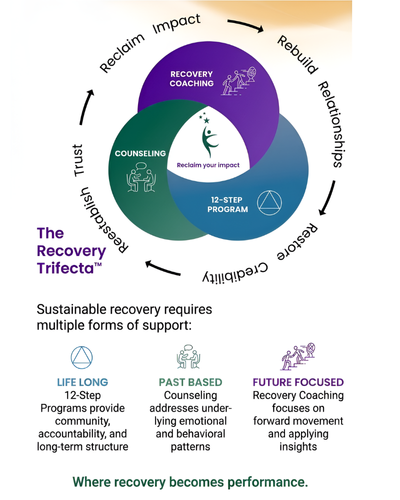
At the heart of Recovery Coaching are the Four R’s:
• Repair Relationships – mending connections strained by addiction. With consistent actions and reliability, you can nurture relationships grounded in respect and authenticity.
• Restore Credibility – rebuilding confidence in your integrity and choices. By aligning your words and actions with your values, you can rebuild credibility and show others the real you.
• Rebuild Trust – cultivating authentic trust in yourself and with others. By rebuilding honest communication, accountability, and intentional action, connections and bonds are restored.
• Reclaim Impact - living with purpose, integrity, and alignment beyond your past. By living in alignment with your values, you can step fully into who you are now—creating a life grounded in purpose, clarity, and self-trust.
About Martha Kesler
Martha Kesler has been part of the recovery community since 2009, bringing lived experience alongside her background as an executive coach and organizational consultant. Her work with Congruism, LLC centers on helping high-performing professionals navigate sobriety with clarity, credibility, and purpose.
To learn more about Recovery Coaching, visit her blog at Congruism.com or reach out directly at mckesler@congruism.com.